
Does Your Website Need a Redesign? 9 Signs It’s Costing You Customers
Your website redesign might be overdue if your site looks outdated, loads slowly, struggles on mobile, or simply isn’t bringing in customers anymore.
And honestly, most business owners already feel it before they fully realize it.
They notice fewer inquiries. Lower engagement. People visiting the site but not reaching out. Maybe competitors suddenly seem more polished online. Maybe the website felt “good enough” five years ago, but now it feels clunky and stale.
Here’s the thing.
A website is often your first impression. Before someone calls you, visits your location, books a service, or fills out a form, they’re usually checking your website first. If that experience feels frustrating or outdated, people leave. Fast.
I see this all the time as the solo designer behind Matt Chase Designs. Businesses invest heavily into their service, branding, equipment, or location… yet the website quietly pushes potential customers away.
Let me explain.
1. Your Website Looks Outdated Compared to Competitors
People notice design more than they admit.
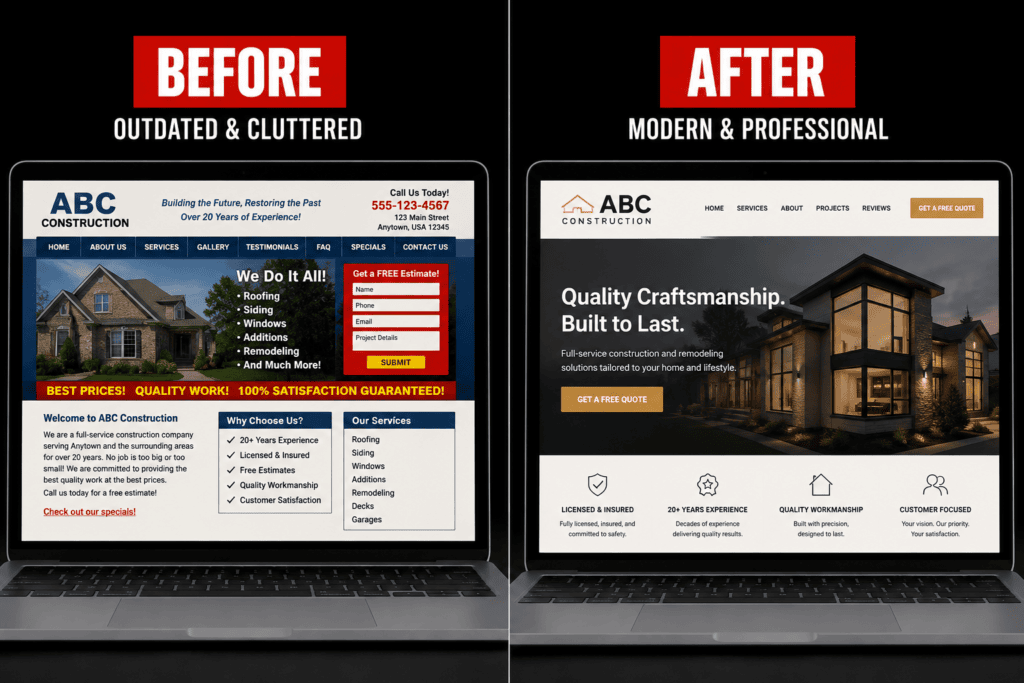
Even if your services are excellent, an outdated website creates hesitation. Visitors may not consciously think, “This site looks old,” but they absolutely feel it.
Tiny fonts. Busy layouts. Old stock photos. Too much text. Weird spacing. Dark gradients from 2014. It adds up.
And once doubt creeps in, conversions drop.
A modern website redesign doesn’t need flashy animations or trendy gimmicks. It just needs to feel clean, trustworthy, and easy to use.
Think of it like walking into a business lobby. If the paint is peeling and the lights flicker, people start questioning everything else too.
2. Your Website Is Hard to Use on Mobile
More than half your visitors are likely on their phones.
Sometimes way more.
Yet so many websites still feel terrible on mobile:
- buttons too small
- text overflowing off screen
- menus that barely work
- giant walls of text
- slow loading images
You know what happens next?
People leave in seconds.
Google notices that behavior too, which can affect rankings over time.
And no, having a “mobile version” isn’t enough anymore. A proper website redesign should be built mobile first from the start.
3. Your Website Loads Slowly
Speed matters more than people think.
A delay of even a few seconds can dramatically increase bounce rates. Especially on mobile connections.
Sometimes business owners focus entirely on appearance while ignoring performance. Ironically, a “beautiful” website can actually lose more customers if it loads like molasses.
Common causes include:
- oversized images
- bloated page builders
- poor hosting
- outdated plugins
- badly written themes
This is one reason many DIY websites built on Wix or Squarespace eventually hit a wall. They work initially, but scaling performance and customization becomes frustrating later.
Not always. But often enough.
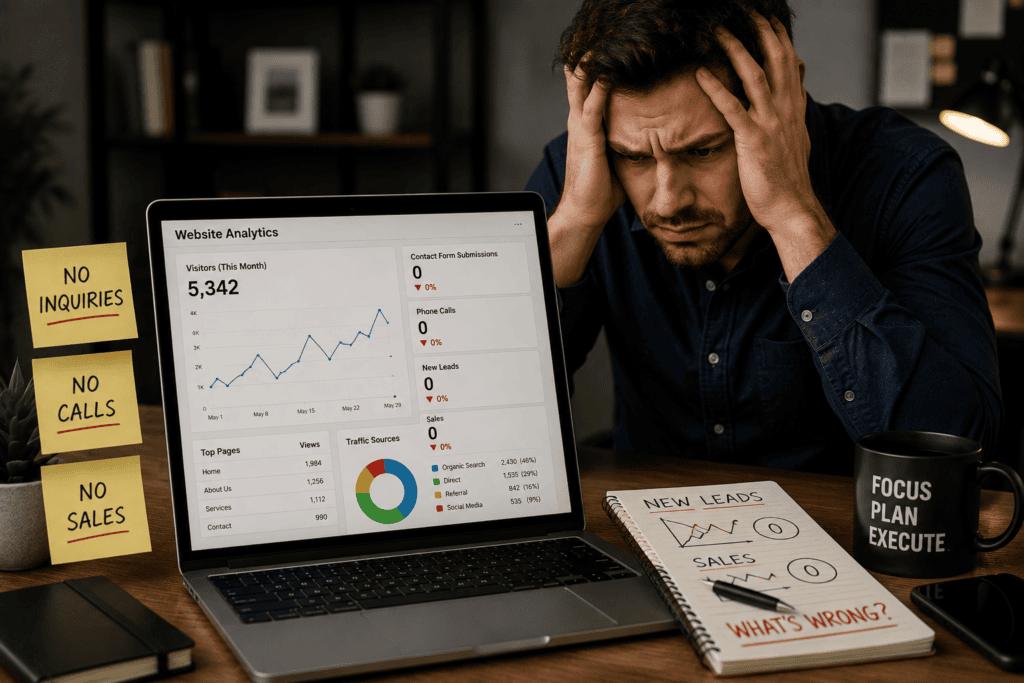
4. Visitors Aren’t Taking Action
Traffic without conversions is basically window shopping.
If people visit your website but rarely:
- call
- book
- purchase
- submit forms
- request quotes
…something is broken in the user journey.
A website redesign can improve this dramatically through:
- clearer calls to action
- better layout flow
- trust signals
- simplified navigation
- stronger messaging
Sometimes the issue isn’t traffic.
It’s friction.
That’s a huge distinction.
5. Your Website Feels Cluttered or Confusing
A lot of websites try to say everything at once.
That usually backfires.
Visitors don’t read websites carefully the way business owners think they do. Most people scan quickly. They’re looking for immediate clarity:
- What do you do?
- Can I trust you?
- How do I contact you?
- Why should I choose you?
If those answers aren’t obvious within seconds, people bounce.
Honestly, simplicity converts better almost every time.
Not boring simplicity. Strategic simplicity.
There’s a difference.
6. Your Website Is Barely Showing Up on Google
A website redesign is not just about visuals.
SEO structure matters too.
If your site:
- lacks proper headings
- has poor mobile performance
- uses weak page structure
- has thin content
- loads slowly
- lacks location relevance
…it becomes much harder to rank.
Google wants websites that create good user experiences. Fast loading pages, clear structure, mobile friendliness, and strong content all matter.
And yes, design affects SEO more than many people realize.
7. Your Branding Feels Inconsistent
This one sneaks up on businesses.
Maybe your logo changed.
Maybe your services evolved.
Maybe your company became more professional over time.
But the website still reflects an older version of the business.
That disconnect creates friction.
A proper website redesign brings everything together:
- visuals
- tone
- colors
- messaging
- photography
- customer expectations
Consistency builds trust. Repetition builds recognition.
And recognition builds conversions.
8. Your Competitors Feel More Trustworthy
Sometimes your competitors are not actually better.
Their websites just make them look better.
That’s the frustrating part.
A clean, fast, modern website instantly increases perceived credibility. Especially in industries where customers compare multiple businesses before reaching out.
This happens constantly with:
- contractors
- salons
- sports facilities
- gyms
- restaurants
- service businesses
People compare websites side by side.
And first impressions happen ridiculously fast.
9. Your Website No Longer Reflects the Quality of Your Business
This is usually the biggest sign of all.
A business grows. Skills improve. Services improve. Reputation improves.
But the website stays frozen in time.
Eventually the gap becomes obvious.
Your website should support your business growth, not hold it back.
And honestly, redesigning your website is not about chasing trends. It’s about making sure your online presence reflects the level your business operates at today.
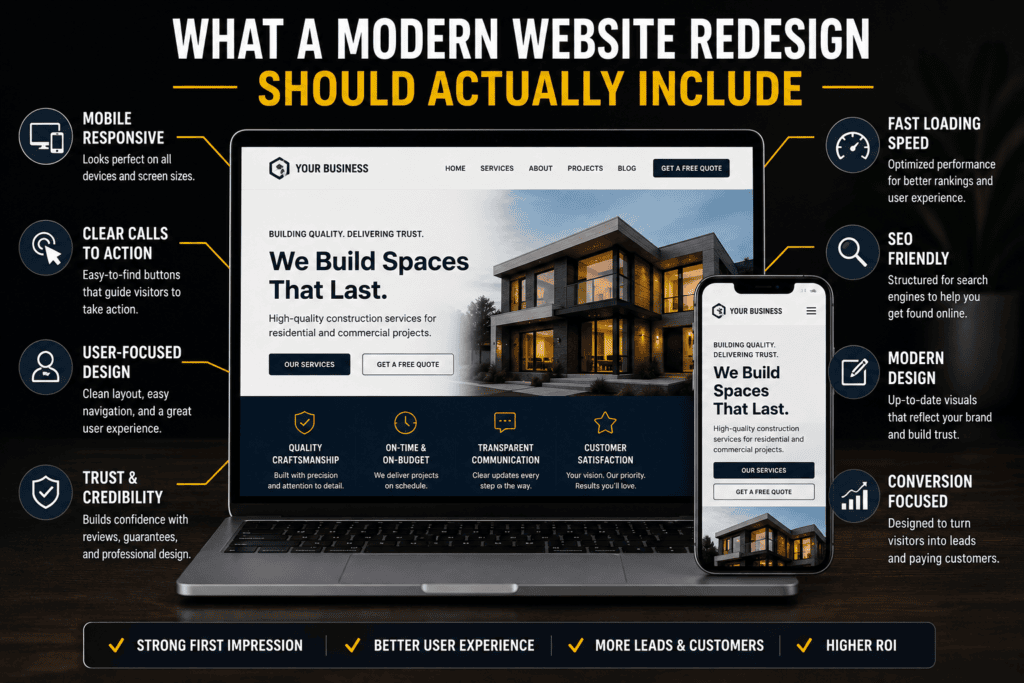
What a Modern Website Redesign Should Actually Include
A high converting website redesign should focus on:
- mobile first layout
- fast load times
- clean navigation
- strong calls to action
- SEO structure
- trust building
- modern visuals
- clear messaging
- easy contact flow
It should look good, yes.
But more importantly, it should help generate leads and customers consistently.
That’s the real goal.
Final Thoughts
If your website feels outdated, confusing, slow, or disconnected from your business, there’s a good chance it’s already costing you customers.
The tricky part is most businesses don’t realize how much opportunity they’re losing until after a redesign improves things dramatically.
A modern website redesign is not just cosmetic anymore.
It affects trust, conversions, SEO, customer experience, and how your business competes online.
And sometimes small changes make a massive difference. Cleaner structure. Better mobile experience. Faster pages. Clearer messaging. Those things add up quickly.
If you’re unsure whether your current website is helping or hurting your business, I offer website redesigns and audits through Matt Chase Designs that break down exactly what may be costing you leads and customers.